
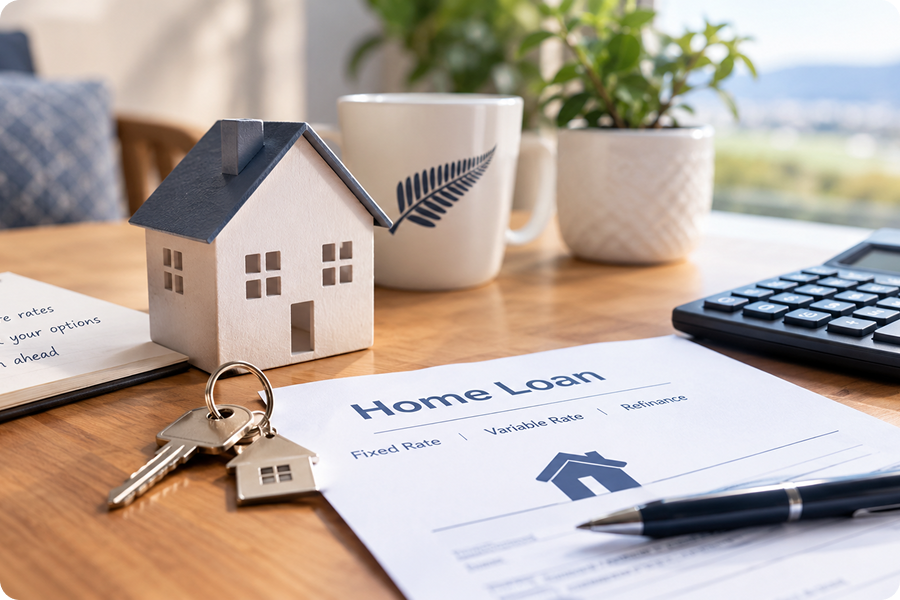
If you have a home loan in New Zealand, you may be wondering whether your repayments are about to go up. Mortgage rates have been facing renewed upward pressure, leaving many households thinking carefully about their next move. Whether you are buying your first home, coming to the end of a fixed-rate deal or simply trying to manage household costs, understanding what is happening could help you plan ahead. Stay with Find NZ for useful updates that make important financial news easier to understand.
Why Home Loan Rates Are Moving Up
New Zealand borrowers are facing the possibility of further mortgage rate increases as economists expect the Reserve Bank to lift the Official Cash Rate (OCR). In its report published on 27 October, RNZ noted that some major banks were offering one-year fixed home loan rates around 4.99%, while two-year rates ranged from 5.29% to 5.45%. These figures provide a snapshot of the market at that time, rather than a guarantee of what every borrower will be offered.
The OCR influences borrowing costs across the economy, but it is not the only factor affecting mortgage rates. Banks also consider wholesale funding costs, market expectations and competition with other lenders. Some fixed mortgage rates can rise before an official OCR increase because financial markets have already anticipated a change. With inflation still a concern, several economists expect further upward pressure on borrowing costs through the rest of 2026 and into 2027. However, the timing and size of any changes remain uncertain, so borrowers should keep an eye on updated bank rates and official announcements.
Should You Fix Your Mortgage for Longer?
If your current home loan is coming up for renewal, you might be weighing up a short-term fixed rate against locking in a rate for two or three years. A shorter term can look attractive because its initial interest rate may be lower. The downside is that you will need to negotiate another rate when the term ends, and that rate could be higher. Fixing for longer may provide greater certainty over repayments, although it can mean paying more at the outset.
There is no single option that suits every household. Before making a decision, compare offers from different lenders, check any fees or special conditions, and consider how much room your budget has for higher repayments. It may also help to ask your bank or mortgage adviser to compare the total cost of different fixed terms rather than focusing only on the advertised rate. For first-home buyers, understanding borrowing costs is equally important when working out how much they can comfortably afford. A little preparation now could help you avoid surprises later and make decisions with greater confidence.
We hope you enjoyed reading this article and found something useful for your own financial planning. Stay with Find NZ for more practical insights, personal finance updates, local news and stories that matter to Kiwis. Whether you want to understand housing trends, explore money-saving ideas or keep up with changes affecting everyday life, browse more articles on Find NZ and continue learning with us.