Even in the remote Arctic, wildlife is facing new challenges that scientists are working hard to understand. A recent discovery in Greenland has revealed that polar bears have been exposed to bird flu, raising fresh questions about the health of animals living in this fragile environment. As scientists learn more about how diseases move between species, the findings offer another reason to pay attention to changes taking place across the natural world. Stay with Find NZ for more fascinating stories that help Kiwis explore important developments beyond New Zealand.
Scientists Find Signs of Bird Flu Exposure in Polar Bears
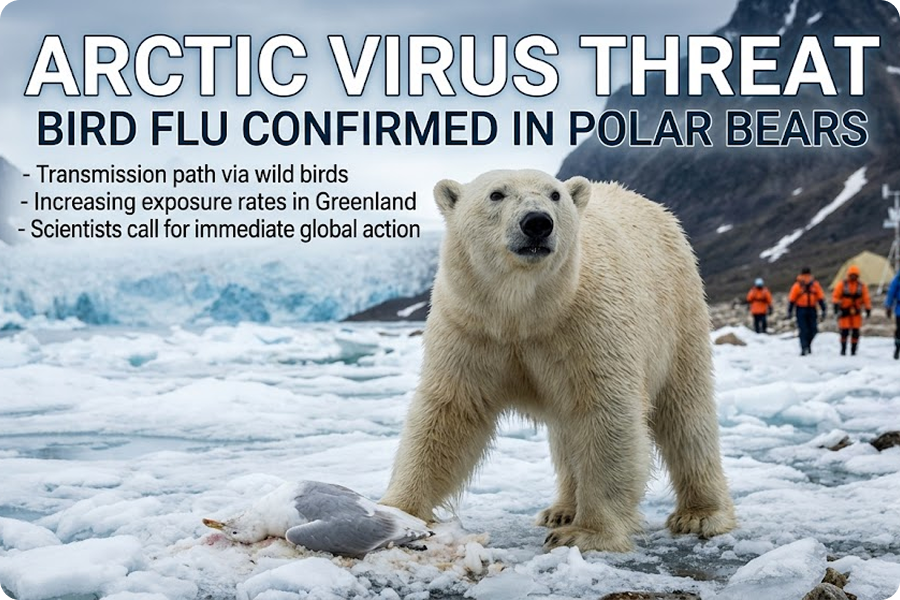
Researchers studying polar bears in eastern Greenland have discovered evidence that the animals were exposed to avian influenza, commonly known as bird flu. The study examined 109 blood samples collected between 2016 and 2025 through collaboration with local Inuit subsistence hunters. Scientists found no influenza A antibodies in samples collected before 2024. However, three of the 14 bears sampled in 2024 showed signs of previous exposure. In 2025, six of the 14 bears tested positive for influenza A antibodies, and further testing indicated that four had been exposed to a highly pathogenic H5 influenza virus.
The findings suggest that bird flu has reached these Arctic predators. Although researchers did not detect active infections through the antibody tests. The hunters involved in the study also reported no obvious signs of illness in the sampled animals. This raises the possibility that some polar bears can survive exposure and recover. Scientists believe migratory birds could play a role in carrying the virus into Greenland. Where wildlife shares feeding grounds and nesting areas. However, the exact route of transmission to individual bears has not been confirmed.
Changing Arctic Conditions Bring New Challenges for Wildlife
Polar bears usually depend on sea ice to hunt seals, their main food source. As Arctic ice retreats, some bears spend more time on land and search for alternative food. They may eat bird eggs, scavenge dead birds or feed on other animals that could carry the virus. These encounters create opportunities for infections to pass between species. Greenland also lies along important Atlantic bird migration routes, bringing together species from different regions during the breeding season.
Scientists are concerned that changing environmental conditions could increase wildlife exposure to unfamiliar diseases. Previous reports have documented fatal bird flu infections in polar bears elsewhere in the Arctic. It is showing that the virus can have serious consequences. However, this latest study does not establish that climate change directly caused the infections detected in Greenland. Researchers say further monitoring is needed to understand how the virus spreads, whether it can pass between bears and how it may affect their long-term survival. The findings also highlight the value of working with Indigenous communities, whose knowledge and participation help researchers monitor wildlife in remote areas.
We hope you enjoyed reading this story and discovered something new about the wildlife and environmental changes shaping our world. Stay with Find NZ for more original articles, nature discoveries, science updates and stories that matter to Kiwis. Explore more on Find NZ to gain knowledge, discover fresh perspectives and keep up with developments from New Zealand and around the globe.