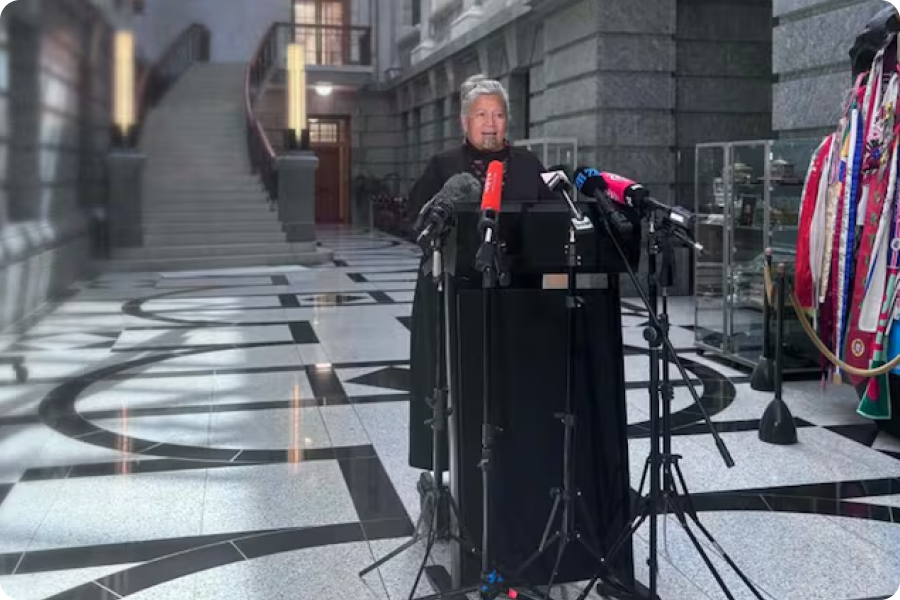
Te Tai Tokerau MP Mariameno Kapa-Kingi has formally broken away from Te Pāti Māori and launched a new political movement ahead of the 2026 general election, creating one of the biggest shifts in Māori politics this year. The newly formed Te Tai Tokerau Party will campaign on kaupapa centered around tino rangatiratanga, regional leadership, and locally driven decision-making.
Kapa-Kingi said the movement aims to strengthen political representation for communities across Te Tai Tokerau while encouraging Māori-led leadership structures grounded in local identity and whānau priorities. In her public statement, she described the party as a platform built “by the people, not imposed from the top down.”
Months of Internal Turmoil Led to the Split
The announcement follows a turbulent period inside Te Pāti Māori that stretched across late 2025 and early 2026. Internal disputes involving leadership, governance, funding concerns, and party direction became increasingly public, eventually leading to Kapa-Kingi’s expulsion alongside Te Tai Tonga MP Tākuta Ferris.
Kapa-Kingi later challenged the decision in the High Court, where Justice Paul Radich ruled the expulsion process was unlawful and inconsistent with the party’s own constitution and tikanga obligations. The court ordered her reinstatement earlier this year, although tensions within the party remained unresolved.
Political observers say the dispute exposed wider divisions around leadership style, organisational structure, and the future direction of Māori political representation.
Te Tai Tokerau Party Sets Out Regional Vision
The new party takes its name from the Te Tai Tokerau electorate, one of the country’s most influential Māori seats covering Northland and parts of Auckland. Kapa-Kingi said the movement would prioritise stronger regional autonomy and community-led policy development.
She also signalled the party hopes to inspire similar regional political movements across Aotearoa, arguing many Māori communities want greater influence over decisions affecting housing, education, healthcare, and economic development.
At this stage, the party has not released its full policy platform, leadership structure, or wider candidate line-up. However, organisers have already begun recruiting volunteers and financial members as preparations begin for the November 2026 election.
Pressure Builds Across Māori Electorates
The split is expected to intensify competition within Māori electorates, particularly Te Tai Tokerau. Labour has already selected Willow-Jean Prime for the seat, while the Green Party is backing Hūhana Lyndon, setting up a highly contested race.
Te Pāti Māori has confirmed it will still contest all seven Māori electorates and plans to announce its remaining candidates in the coming months. Party leaders said their focus remains on tino rangatiratanga, Te Tiriti justice, and strengthening Māori political influence nationwide.
Analysts say the emergence of Te Tai Tokerau Party could reshape voter dynamics across northern Māori communities, especially among voters seeking more independent regional representation rather than broader national party structures.
Wider Impact on New Zealand Politics
The development comes at a time when New Zealand’s political landscape is becoming increasingly fragmented ahead of the 2026 election. Smaller and kaupapa-driven parties are gaining visibility as voters look for representation more closely aligned with regional priorities and community identity.
Political commentators believe the split may influence coalition calculations and Māori electorate campaigning throughout the election year, particularly if support becomes divided between Te Pāti Māori, Labour, Greens, and new regional movements.
The coming months are expected to reveal whether Te Tai Tokerau Party can convert grassroots support into a broader national political presence.
For more political developments and election coverage, readers can explore Find New Zealand for ongoing updates and in-depth reporting from across Aotearoa.