
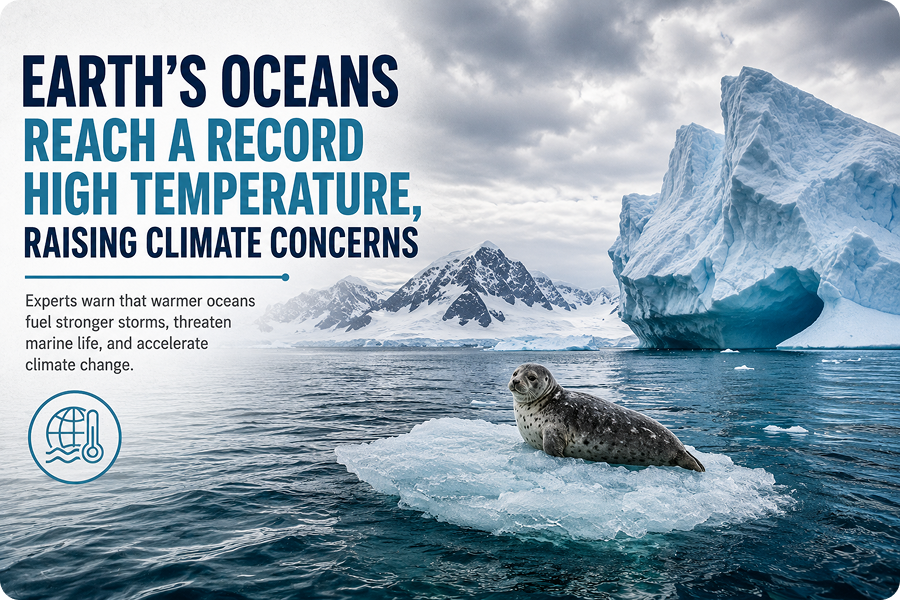
The world’s oceans have reached their highest average temperature since modern records began, giving scientists another clear sign of the rapid changes taking place across the planet. Global sea surface temperatures reached 21.10°C on 22 August, slightly exceeding the previous record of 21.09°C recorded in March 2024, according to the European Union’s Copernicus Climate Change Service.
The new record comes as a particularly strong El Niño develops across the Pacific. Scientists say the natural climate pattern is adding to the long-term warming caused by human activities. The combination is placing additional pressure on marine ecosystems and could influence weather conditions in different parts of the world.
Oceans Absorb Most of the Planet’s Excess Heat
The world’s oceans play a major role in regulating Earth’s climate because they absorb a large share of the excess heat produced by global warming. That makes rising ocean temperatures an important indicator of broader changes in the climate system.
The latest measurement is especially notable because the record was reached in August, rather than during the warmer part of the year when ocean temperatures typically approach their annual highs. Copernicus data shows that daily sea surface temperatures had remained unusually high through June and July before approaching the previous all-time mark.
Marine Life Faces Growing Pressure
Warmer seas can create difficult conditions for marine ecosystems. Coral reefs, fish populations and other ocean species depend on particular temperature ranges, and prolonged heat can disrupt habitats and food chains.
Scientists are also concerned about the ocean’s ability to absorb carbon dioxide. Warmer water generally becomes less effective at taking up carbon, which could influence the balance of greenhouse gases in the atmosphere. Researchers have warned that continued ocean heating could place further stress on ecosystems already dealing with pollution, overfishing and other environmental pressures.
El Niño Could Add Further Heat
The current El Niño is another important factor behind the unusual ocean conditions. The climate pattern causes warmer-than-usual waters across parts of the Pacific and can influence weather far beyond the region.
Scientists expect the current event to strengthen further, which means ocean temperatures could remain exceptionally high in the months ahead. Warmer seas can also provide additional energy for some storms and contribute to heavier rainfall in certain regions.
A Record Worth Paying Attention To
One record-breaking temperature does not explain every weather event, but the broader trend is significant. Ocean temperatures have remained unusually elevated in recent years, with 2026 already producing several records for different periods.
For communities around the world, continued ocean warming could affect fisheries, coastal environments, weather patterns and marine biodiversity. The latest record therefore offers another reason for scientists and policymakers to closely monitor changes taking place beneath the surface.
We hope this article helped you understand why the latest ocean temperature record matters and what it could mean for the environment. Stay with Find NZ for more climate stories, environmental developments, science updates and informative topics that matter to Kiwis. Keep exploring Find NZ to gain knowledge, discover useful insights and stay connected with important developments in New Zealand and around the world.