
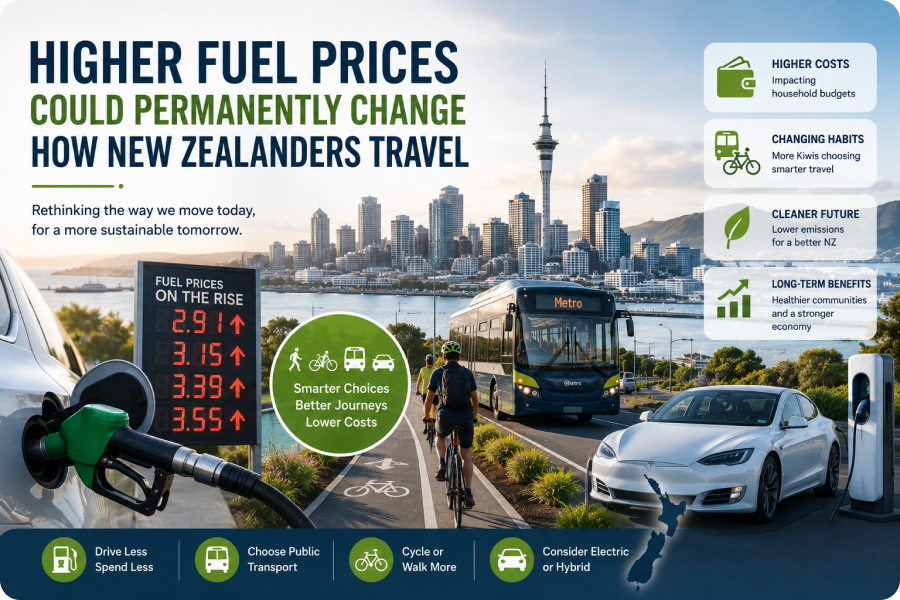
Rising fuel prices and the possibility of increased transport taxes are prompting fresh discussions about how New Zealanders move around their communities. Researchers and transport experts suggest that higher fuel costs may encourage long-term changes in travel habits, with more people considering alternatives to regular private vehicle use.
Fuel prices have a direct impact on household budgets, particularly for families that rely heavily on private vehicles for work, education, and everyday activities. As costs increase, people often begin reassessing their transport choices and looking for ways to reduce expenses.
Higher Costs May Encourage Different Travel Choices
Transport studies have shown that increasing fuel costs can influence travel behaviour over time. Some people choose public transport more frequently, while others consider carpooling, cycling, walking, or combining multiple errands into fewer trips. Research indicates that rising fuel prices can lead to increased public transport use and gradual shifts in commuting patterns.
For urban areas with access to buses, trains, and cycling infrastructure, higher fuel costs may encourage residents to explore more cost-effective transport options. However, experts acknowledge that alternatives are not always available, particularly in rural communities where private vehicles remain essential.
Impact Extends Beyond Personal Travel
Fuel prices affect more than daily commuting. Higher transport costs can influence business operations, freight services, delivery expenses, and household spending decisions. Rising costs can also affect access to employment opportunities and essential services, particularly for lower-income households and communities with limited transport options.
Transport specialists say lasting behaviour changes usually occur when higher costs continue over extended periods. People may decide to live closer to workplaces, adjust shopping habits, or increasingly adopt alternative forms of transport if economic conditions make those options practical and affordable.
Future Transport Planning Remains Important
The discussion around fuel prices and transport taxes also highlights the importance of long-term planning. Investment in reliable public transport, safer walking and cycling networks, and improved transport infrastructure could provide communities with more choices if fuel costs continue to fluctuate.
While the future direction of fuel pricing and transport policy remains uncertain, the conversation demonstrates how economic pressures can influence everyday behaviour. For many New Zealanders, transport decisions are increasingly becoming a balance between affordability, convenience, and long-term sustainability.
We hope you enjoyed reading this article and gained useful insights along the way. Stay with Find NZ for more informative stories, practical updates, and local topics that matter to Kiwis. Explore more articles on Find NZ and continue discovering the trends shaping everyday life across New Zealand and beyond.