
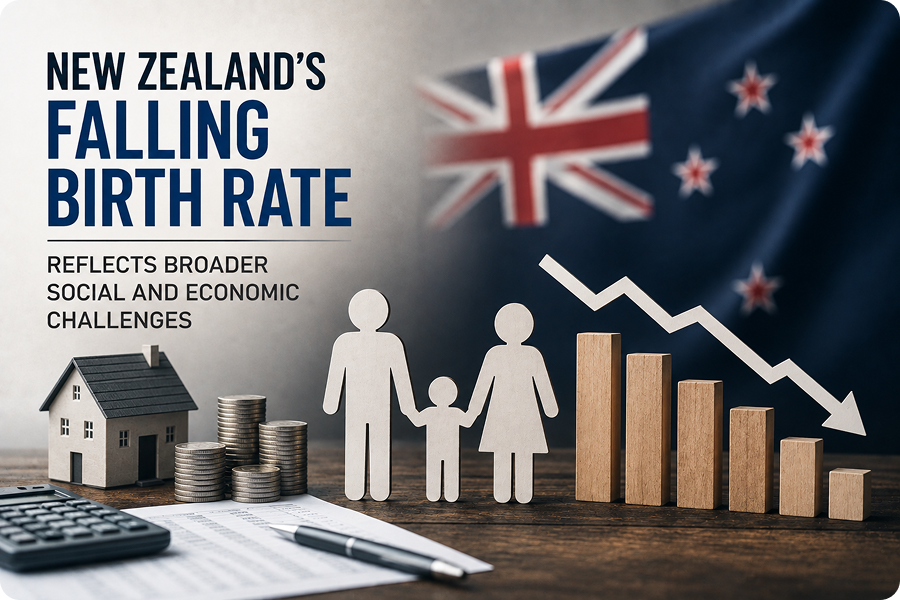
New Zealand’s declining birth rate is attracting growing attention. The researchers are saying the trend is influenced by a combination of financial and social factors. And lifestyle factors rather than a single issue. While ideas such as baby bonuses are often suggested to encourage higher birth rates. The experts believe the reasons people delay or decide against having children are far more complex.
Recent discussions have highlighted that many New Zealanders are carefully weighing. Like long-term financial security, housing affordability, career goals, and access to childcare before starting or expanding a family. Demographers say these decisions are increasingly shaped by broader economic conditions rather than short-term financial incentives alone.
Why Birth Rates Are Continuing to Decline
Experts point to several factors contributing to New Zealand’s lower birth rate. Rising housing costs, increased living expenses, student debt, changing career priorities, and later family planning have all influenced decisions about parenthood. Many couples are choosing to have children later in life, while others are deciding to have smaller families or remain child-free.
Researchers also note that improved education, greater workforce participation, and changing social expectations have given people more flexibility in deciding when and whether to have children. These long-term demographic changes are being seen across many developed countries, making New Zealand part of a broader global trend rather than an isolated case.
Financial Incentives Alone May Have Limited Impact
Some countries have introduced baby bonuses or one-off payments to encourage higher birth rates. However, academics argue these programmes often produce only temporary results and rarely change long-term family planning decisions on their own.
Instead, experts suggest that affordable housing, accessible childcare, flexible workplace policies, paid parental leave, quality healthcare, and stable employment opportunities may have a greater influence on people’s confidence to raise a family. A supportive environment can reduce financial pressures and make parenthood a more practical option for many households.
Long-Term Impacts on Society and the Economy
A declining birth rate can affect many areas of society over time. Fewer births may contribute to an ageing population, increased demand for healthcare and aged care services, and changes to the future workforce. Businesses, education providers, and policymakers may also need to adapt to changing population trends.
Demographers believe understanding the reasons behind these changes is essential for developing effective long-term policies. Rather than focusing on a single solution, they encourage a broader approach that addresses the economic and social factors influencing family decisions.
Looking Ahead
New Zealand’s changing birth rate reflects the evolving priorities and circumstances of modern society. While public discussion around possible solutions will continue, experts agree that meaningful improvements are likely to require long-term investment in housing, childcare, employment, and family support rather than relying on one financial incentive.
We hope you enjoyed reading this article and gained valuable insights along the way. Stay with Find NZ for more political news, social trends, economic updates, and informative stories that matter to Kiwis. Whether you’re looking to gain knowledge, understand important national issues, or stay informed about developments across New Zealand, Find NZ is here to keep you connected.