
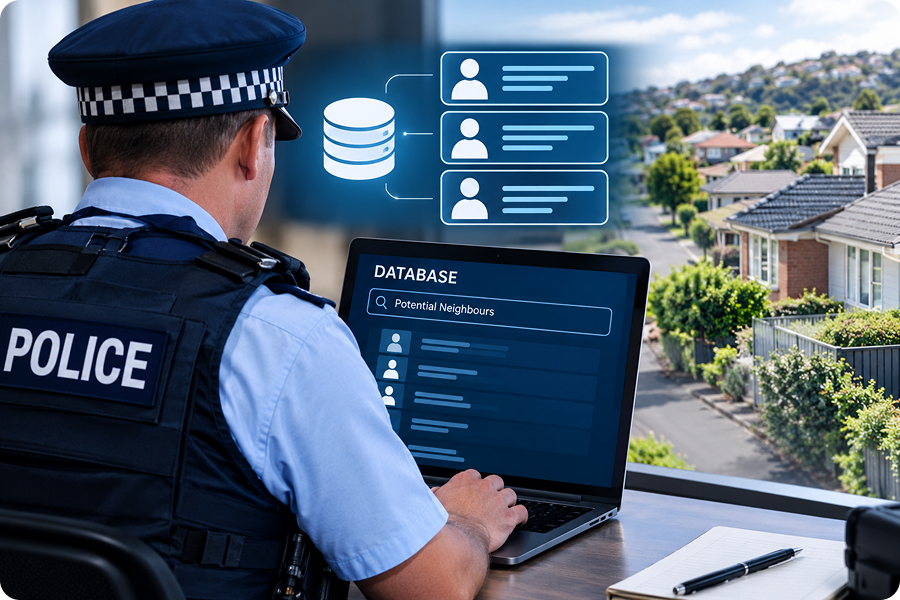
A New Zealand police officer has been found to have carried out unauthorised database checks on people connected to a property he was considering buying.
An investigation found that the officer used the Police National Intelligence Application, known as NIA, to look into the neighbours of the house. He also searched for information about people he was considering having as flatmates.
The searches were identified during an audit of the officer’s use of the police intelligence system. The checks took place during 2024 and 2025 while the officer was off duty.
Checks Extended Beyond the Property
The investigation found that the officer did not limit his searches to information connected with his police duties.
The NIA searches included people living in houses neighbouring the property he was interested in buying. He also checked people who were being considered as flatmates before they moved into the property.
Police found that the officer went further by sharing information about the potential flatmates with his partner.
The case highlights why access to police databases is restricted. Information held by law enforcement can contain sensitive personal details, and access is intended to be connected to legitimate policing purposes.
Police Found Serious Misconduct
Following the investigation, New Zealand Police concluded that the officer had breached its policy governing the acceptable use of information and technology.
Police also determined that the conduct amounted to serious misconduct. Acting Waitematā District Commander Matt Laurenson said the officer’s actions did not meet the standards expected of police staff.
An employment process was subsequently carried out. Despite the findings, the officer remains employed by New Zealand Police.
The case shows the importance of controls around government and law-enforcement databases. While officers may have legitimate access to extensive information as part of their work. That access comes with responsibilities about when and why information can be searched.
Why Database Access Rules Matter
Police databases can contain information that members of the public would not normally be able to access. Rules governing these systems are designed to ensure information is used for appropriate purposes.
Using such information for personal matters can raise privacy concerns, particularly when the people being searched have no connection to a police investigation.
The incident also demonstrates the role of audits in identifying inappropriate database use. In this case, an audit of the officer’s NIA activity led to several unauthorised searches being identified.
For the public, the case provides a reminder that access to personal information by authorities is subject to rules and oversight. It also highlights the importance of accountability when those rules are not followed.
Find NZ continues to cover stories that raise important questions about everyday life, public services and the use of information in New Zealand. Explore more stories on Find NZ for useful local developments and issues. It helps readers understand what is happening around the country.