
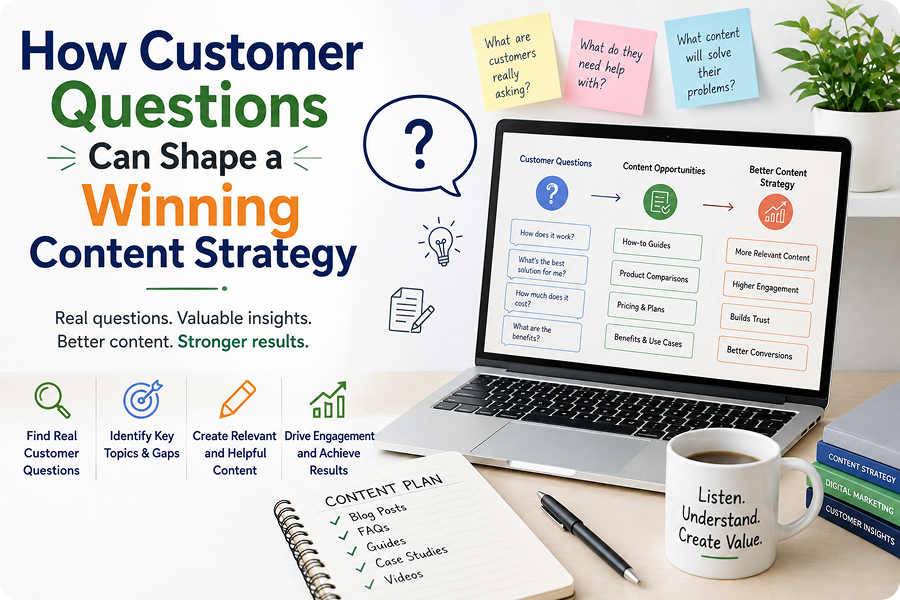
Why Customer Questions Matter More Than Ever
A successful content strategy does not begin with a list of keywords. It begins with understanding what customers actually want to know.
Every day, potential customers ask questions before they choose a product, contact a business, or make a purchase. They want to understand their options, compare solutions, solve problems, and feel confident about their decisions. These questions provide valuable insights into what your audience needs from your brand.
Businesses that pay attention to these questions can create content that is more relevant, useful, and aligned with real customer needs. Instead of publishing content simply to maintain a blog, they can build a strategy around the topics their audience is already searching for.
This approach can support SEO, increase organic visibility, strengthen brand authority, and ultimately help turn website visitors into customers.
Your Customers Are Already Telling You What to Write
One of the most valuable sources of content ideas is often already available within your business.
Sales teams hear questions from prospects. Customer service teams respond to recurring concerns. Businesses receive enquiries through email, social media, website forms, phone calls, and online reviews.
These interactions reveal exactly where customers need more information.
For example, if customers repeatedly ask about pricing, delivery times, product comparisons, service processes, or expected results, those questions can become useful website content. A detailed article or FAQ can answer the question before another potential customer needs to ask it.
This creates a simple but powerful connection between customer experience and content marketing.
Customer Questions Can Reveal Search Intent
Search engines have become increasingly sophisticated at understanding why someone is searching for information. Customers may use different words to ask similar questions, but their underlying intent can remain the same.
Someone searching for “best accounting software for a small business” is likely researching options. Someone searching for “accounting software pricing” may be closer to making a decision. Another person searching for “how to choose accounting software” may still be evaluating their needs.
Understanding these differences allows marketers to create content for different stages of the customer journey.
Instead of producing one generic article, businesses can create informative content for awareness, comparison content for consideration, and service or product-focused content for customers who are ready to take action.
Questions Can Build a Stronger SEO Content Strategy
Keyword research remains important, but customer questions can make keyword targeting far more meaningful.
A keyword may show that people are searching for a particular topic, while customer questions reveal what they actually want to understand about that topic.
For example, a business might identify a keyword related to “digital marketing strategy”. Customer research could reveal more specific questions such as:
“How much does digital marketing cost?”
“Which digital marketing strategy works for small businesses?”
“How long does SEO take to produce results?”
Each question represents a potential content opportunity.
By building articles, guides, FAQs, and service pages around genuine questions, businesses can develop a more comprehensive content strategy while naturally covering related search terms and topics.
The Best Content Answers the Next Question Too
A strong content strategy does more than answer one question. It anticipates what the reader is likely to ask next.
Imagine someone searching for information about website redesign. They may initially want to know whether their website needs an update. Once they understand the benefits, their next questions could involve cost, timeframe, process, SEO impact, and choosing the right provider.
A useful piece of content should address these connected concerns where appropriate.
This makes the content more valuable to readers and creates opportunities to demonstrate expertise. It can also encourage visitors to explore related pages, increasing engagement with the website.
Turn Customer Questions Into Content Clusters
Repeated questions can become the foundation of a structured content strategy.
Rather than publishing unrelated blog posts, businesses can organise content around major topics. A central pillar page can provide a broad overview, while supporting articles answer specific questions in greater detail.
For example, a business offering digital marketing services could create a main guide about digital marketing strategy and support it with content covering SEO, content marketing, paid advertising, social media marketing, conversion optimisation, and measuring campaign performance.
This approach helps readers find related information while giving search engines a clearer understanding of the website’s expertise.
Customer Questions Can Improve Lead Generation
Content should not only attract visitors. It should help move them towards becoming customers.
When a business answers questions that potential customers have before making a purchase, it removes uncertainty. Helpful content can explain processes, clarify expectations, address objections, and demonstrate expertise.
This can make visitors more comfortable taking the next step, whether that means requesting a quote, booking a consultation, signing up for an email list, or contacting the business.
The key is to make the next step relevant to the question being answered rather than adding a generic sales message to every page.
Use Real Customer Language
Another advantage of using customer questions is that they provide natural language.
Customers do not always describe products or services using industry terminology. They may use simpler phrases, describe a problem, or explain what they want to achieve.
Using this language in content can make articles easier to understand and more relatable. It can also help businesses identify conversational search queries that may otherwise be overlooked during traditional keyword research.
The goal is not to force customer phrases into content. It is to understand how the audience communicates and create useful information around those needs.
Where to Find Valuable Customer Questions
Businesses have many potential sources for customer questions. Website search data, customer reviews, sales conversations, support enquiries, social media comments, online communities, competitor FAQs, and keyword research can all reveal useful topics.
Google’s search suggestions and related questions can also help identify common search patterns. Website analytics can then show which topics attract visitors and which pages contribute to conversions.
The most effective strategy combines these sources rather than relying on a single research method.
Keep Improving Your Content Strategy
Customer behaviour changes over time, so a content strategy should never remain static.
New products, changing customer expectations, industry developments, and emerging search trends can all create new questions. Reviewing customer enquiries and content performance regularly helps businesses identify opportunities to update existing articles or create new resources.
An article that answered an important question two years ago may now need updated statistics, examples, recommendations, or additional information.
Keeping content current can improve its usefulness while helping businesses maintain their authority in competitive search results.
Build Content Around People, Not Just Algorithms
The strongest content strategies put customers at the centre.
SEO can help people discover your content, but relevance and usefulness determine whether they continue reading, trust the information, and take action. Businesses that focus exclusively on search rankings can easily lose sight of the person behind the search query.
Customer questions provide a practical way to bring the audience back into the content planning process. They help businesses understand what matters, what causes uncertainty, and what information can influence a buying decision.
Final Thoughts
A winning content strategy starts with listening. Customer questions provide direct insight into the problems people are trying to solve, the information they need, and the factors influencing their decisions.
By turning those questions into valuable articles, guides, FAQs, and other resources, businesses can create content that supports both SEO and customer experience. The result is a more focused content strategy that can attract relevant organic traffic, build trust, strengthen brand authority, and generate better-quality leads.
For businesses across New Zealand, being discoverable where customers search is an important part of long-term digital growth. Find New Zealand helps people discover reputable local businesses and services, giving businesses another opportunity to strengthen their online presence and connect with potential customers.
If your business wants to turn customer insights into a stronger digital marketing strategy, Kickstart Digital can help develop SEO, content marketing, performance marketing, Google Ads, and digital growth strategies built around your audience and business goals.
The brands that listen closely to their customers are often the ones that create the content people actually want to read and ultimately, the businesses people remember when it is time to buy.